A revolving boss chair can provide useful support, but a large executive silhouette can also block aisles, prevent close approach to a desk, and add noise to a shared floor. You will be able to compare chair types, check the workstation dimensions, test the moving parts, and demand the specifications needed for a defensible purchase.
Key takeaways
- Choose a chair with seat height, depth and armrests matched to the workstation.
- Prefer task or mesh chairs when shared desks need airflow and frequent movement.
- Test casters, swivel noise and recline movement on the actual office floor.
- Get dimensions, warranty, upholstery and replacement-part terms in writing.
What a revolving boss chair means in an open-plan office
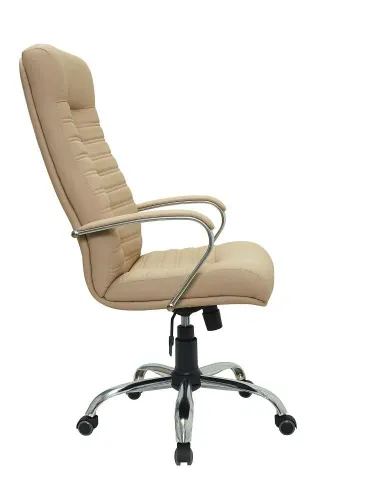
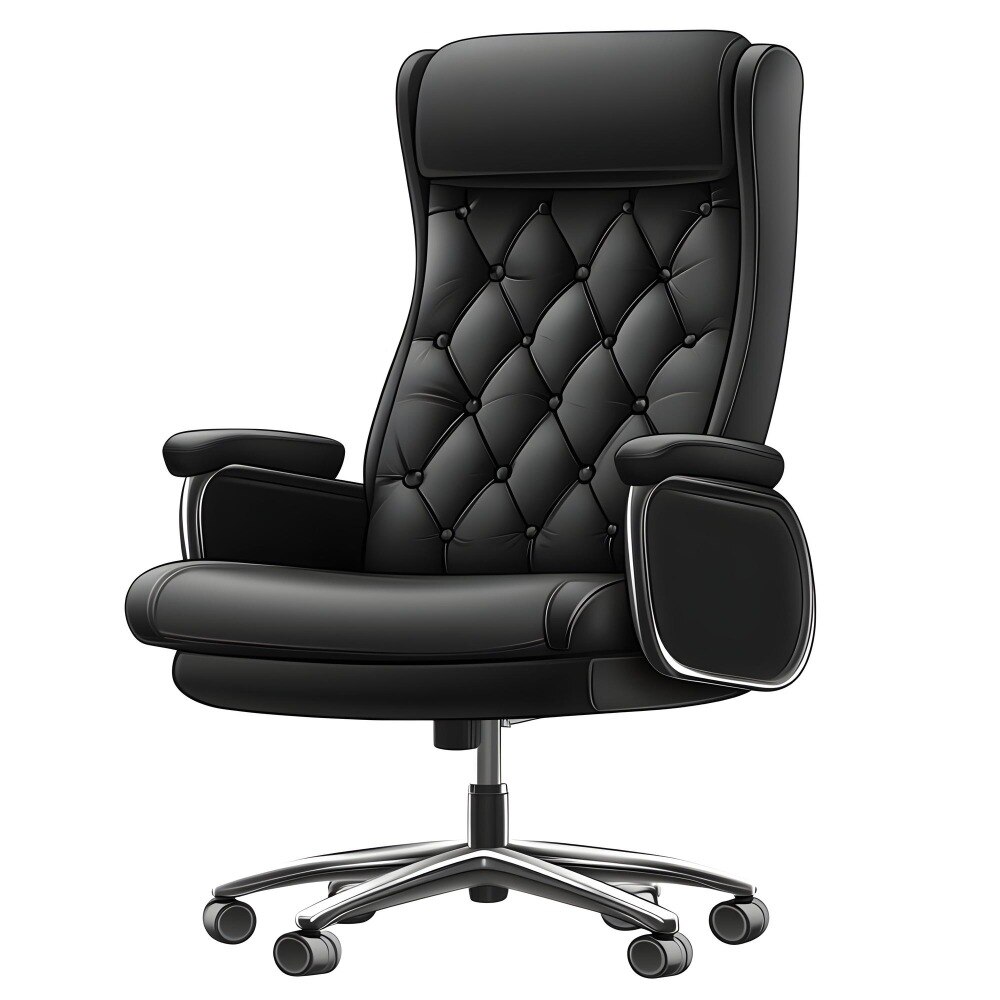
A revolving boss chair combines a 360-degree swivel with a rolling five-star base. “Boss” describes the executive build: a broader padded seat, taller backrest, armrests and heavier upholstery, not a guarantee of better support.
The parts that define it are:
- A five-star base with castors suited to the installed floor
- A gas lift for independent seat-height adjustment
- A seat pan that supports the thighs without pressing behind the knees
- A backrest with lumbar contact and enough height for the upper back
- Armrests that fit inside the desk envelope
- A tilt mechanism with adjustable tension, ideally synchro-tilt for typing and reading
A revolving boss chair for open plan office in Thane suits shared seating when the workstation has enough clearance for its base, arms and reclining movement. It is a sensible choice for an enclosed manager workstation, private cabin or meeting room, or for a user who needs extra upper-back support.
A high-back executive silhouette is a poor default beside benching, clustered desks, hot desks or narrow aisles. Its greater visual and floor volume can crowd circulation, and wide arms or a large polished base can stop the chair sliding under the desk.
Test the actual sample at the installed desk for a full working session. Check flat feet, knee clearance, lumbar contact, armrest-to-desk clearance and noise from swivelling, rolling, lifting and reclining. A showroom chair can feel comfortable for two minutes and fail by lunchtime.
Boss chair, task chair or mesh chair: which fits the floor plan?
Choose a compact task chair as the default beside benching, clustered workstations and hot desks. A high-back executive boss chair takes more visual and floor space, blocks narrow aisles and may not slide under a standard desk. Use it for a private cabin, manager’s workstation, meeting room, or a user who needs extra upper-back support.
| Option | Strength in a shared office | Main drawback |
|---|---|---|
| Task chair | Adjustable seat height, lumbar support and compact proportions suit long computer work | Less executive appearance |
| Mesh chair | Breathable back reduces heat during long sitting and suits warm rooms | Mesh tension and frame quality vary; it is a material choice, not a complete chair category |
| Operator chair | Practical, compact and easy to assign across workstations | Basic models can lack useful recline control or durable padding |
| Boss chair | Higher back, broader seat and stronger visual presence | Large arms and base reduce desk clearance and usable aisle width |
| Fixed visitor chair | No casters, swivel noise or rolling into walkways | Cannot support active desk work or frequent posture changes |
For a boss chair for open office in Thane, check the compact five-star base, arm width and casters against the installed floor. Test swivel, rolling, gas-lift movement, tilt and armrest contact for squeaks or hard impacts.
Choose a synchro-tilt mechanism when users alternate between typing, reading and conversation; set its tension so the chair neither throws the user backward nor forces them forward.
Before approving any revolving boss chair for an open office in Thane, place one at the actual desk for a full working session and check flat feet, knee clearance, lumbar contact, armrest-to-desk clearance and noise.
Which dimensions and adjustments must match the workstation?
Seat height, seat depth, seat width, desk height, armrest clearance and recline space determine whether employees can work safely. For a revolving office chair for corporate workspace in Thane, adjustability matters more than the “boss chair” label: feet must rest flat, knees must clear the seat edge, and the lower back must remain supported.
| Measurement | Match to check | Failure if mismatched |
|---|---|---|
| Seat height | Feet flat on the floor; thighs level or slightly downward | Dangling feet create pressure under the thighs |
| Seat depth | Leave roughly 5 cm between the seat edge and the knees | A long pan presses behind the knees |
| Seat width | Hips fit without contact with the arm supports | Narrow seating restricts posture and movement |
| Desk and arms | Elbows sit near desk height; armrests fit beneath the worktop | Arms block close approach and shrink aisle space |
| Base and recline | Five-star base stays within the workstation footprint; rear clearance allows reclining | A wide base or chair back obstructs circulation |
Check the complete workstation, not the chair in isolation:
- Use a desk with enough height adjustment to keep shoulders relaxed and upper arms close to the body. A fixed high desk may require a footrest or a different desk.
- Set lumbar support against the lower back and use a seat pan that does not force the user forward.
- Choose a compact base and arms that remain inside the desk envelope.
- Allow the chair to roll and swivel without striking neighbouring desks, pedestals or passing employees.
- Match the casters to the actual floor; hard casters on a hard floor increase rolling and collision risk.
How to test comfort, movement, heat and office-floor noise
A two-minute showroom sit proves very little. Test one sample at the actual workstation, on the installed floor, through a full working session before approving it for long shifts or shared use.
1. Sit with both feet flat for 30 minutes, then check pressure under your thighs, seat-edge contact, lumbar support and shoulder position. Repeat the test after lunch; heat and discomfort that appear later will not show during a quick trial.
2. Adjust the seat so your knees clear the underside of the desk and your armrests pass beneath or beside the desktop. If the arms block close approach, users will lean forward or leave the chair outside the workstation, narrowing the aisle.
3. Swivel fully several times, roll forward and back, and reposition beside the desk without twisting your torso. Place the phone, pedestal and frequently used items within normal reach; a smooth swivel cannot correct a poor workstation layout.
4. Listen at each movement point: caster rolling, 360-degree rotation, gas-lift adjustment, tilt operation and armrest contact. Reject a chair that squeaks, clicks repeatedly or drops with a hard impact when its base or casters meet the floor.
5. Test the chair on the real flooring with nearby colleagues working. Check whether rolling, reclining, swivelling or arm contact creates noise that carries across the open plan, especially during quiet calls.
6. Repeat the tests with different users and settings. Record which adjustments they made, whether the five-star base collides with desks, and whether the upholstery feels hot after sustained sitting. A chair that passes for one body may fail the shared floor.
The written supplier checklist and the final selection rule
Reject any chair the supplier will not specify in writing. A showroom promise cannot settle whether the model fits your desks, floor, maintenance plan, or shared-office noise limits.
1. Ask for the exact model specification: seat-height range, seat width and depth, back height, five-star base diameter, armrest width, caster type, maximum user load, tilt range, and whether the mechanism is synchro-tilt or simple free-tilt.
2. Confirm that the arms fit inside your desk envelope and that the base rolls on your installed floor. Hard casters on tile or soft casters on carpet can create noise, drag, or sudden movement.
3. Request written warranty terms covering the gas lift, casters, tilt mechanism, armrests, and upholstery. Ask who supplies replacement parts, the service contact in Thane, and the response process for a failed chair.
4. Test one sample at the actual workstation for a full working session. Check flat feet, knee clearance, lumbar contact, seat-edge pressure, armrest-to-desk clearance, swivel noise, caster noise, gas-lift movement, and the sound when the base meets the floor.
5. Record the sample’s model number and adjustments before approving bulk delivery. If you evaluate Shaad Enterprises, apply this same written checklist rather than relying on the product label.
Accept the boss chair for company office in Thane only when it fits the desk, leaves the aisle usable, stays quiet, supports the user without forced posture, and has clear service terms. Reject it if any one of those tests fails.
Frequently asked questions
What does a revolving boss chair mean in an open-plan office?
It is a chair with 360-degree swivel and a rolling five-star base, usually with a broader padded seat, taller backrest, armrests and heavier upholstery.
Should you choose a boss chair, task chair or mesh chair?
Choose a boss chair for a larger executive-style seat, a task chair for frequent movement and shared desks, or a mesh chair when airflow matters.
Which chair dimensions must match the workstation?
Check seat height, seat depth, seat width, armrest height, backrest height and base clearance against the desk and the user’s leg position.
How do you test a chair for comfort, movement, heat and noise?
Sit for a sustained trial, check lumbar and thigh support, test recline and swivel, move across the actual floor surface, and listen for caster and base noise.
What should a supplier provide in writing?
Request the chair’s dimensions, adjustment range, upholstery details, weight capacity, warranty, delivery terms and availability of replacement casters or parts.
Keywords