Every workplace operates differently. A software company may require collaborative workstations, while a financial institution may prioritize privacy, storage, and executive cabins. Because no two offices are exactly alike, office furniture customization for corporate workspaces has become an increasingly valuable approach for organizations planning new offices or renovating existing ones.
Instead of adapting business operations to standard furniture, customized office furniture allows workspaces to be designed around employee needs, available floor space, and organizational goals.
Why Customization Is Growing in Popularity
Modern offices are expected to support productivity, collaboration, employee comfort, and future expansion.
Standard furniture may not always meet these requirements.
Customized furniture provides flexibility by allowing businesses to determine:
- Workspace dimensions
- Storage capacity
- Material selection
- Colour combinations
- Cable management solutions
- Layout configurations
This results in furniture that integrates naturally with the office environment.
Understanding Workplace Requirements
Before beginning a customization project, organizations should carefully assess how employees use their workspace.
Questions worth considering include:
- How many employees require workstations?
- Are collaborative spaces needed?
- How much document storage is required?
- Will departments expand in the future?
- Are meeting rooms used frequently?
- Is hybrid working part of the organization's model?
Answering these questions helps create furniture that supports daily operations rather than limiting them.
Commonly Customized Furniture
Corporate offices frequently customize:
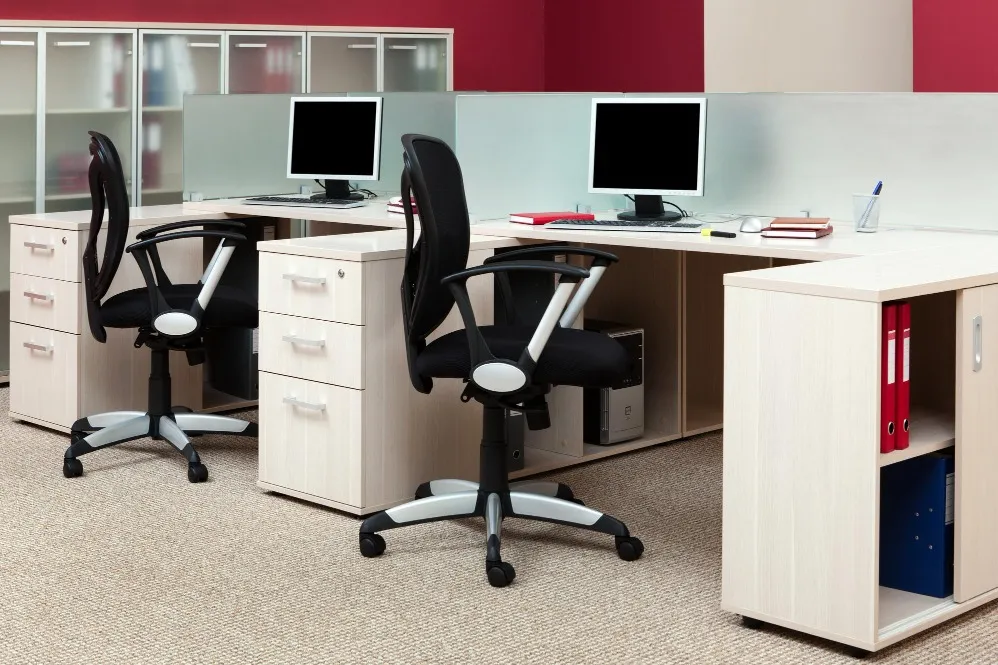
- Workstations
- Executive desks
- Reception counters
- Conference tables
- Storage cabinets
- Filing units
- Collaborative seating
- Manager cabins
Each item can be designed according to operational requirements and available space.
Benefits Beyond Appearance
Customization is not only about aesthetics.
It also improves:
- Space utilization
- Workflow efficiency
- Employee comfort
- Storage organization
- Brand consistency
- Long-term adaptability
Well-planned furniture often contributes to smoother day-to-day operations.
Material Selection Matters
Choosing the right materials helps balance durability with maintenance.
Popular choices include:
- Engineered wood
- Powder-coated steel
- High-pressure laminates
- Toughened glass accents
- Premium hardware
Material selection should reflect expected usage rather than appearance alone.
Working with an Experienced Manufacturer
Customization requires accurate planning and coordination.
Businesses should look for manufacturers that can provide:
- Design consultation
- Space planning
- Material recommendations
- Manufacturing expertise
- Quality assurance
- Timely project execution
- Installation support
These services help reduce project delays while improving overall results.
Planning for Future Growth
One advantage of customized furniture is scalability.
Organizations can design modular workstations and storage systems that allow future expansion without replacing existing furniture.
This approach supports:
- Growing employee teams
- Department restructuring
- Technology upgrades
- Changing office layouts
Planning ahead often reduces long-term renovation costs.
Corporate offices across Thane continue investing in customized furniture solutions that improve both functionality and workplace efficiency. Shaad Enterprises works with businesses requiring tailored office furniture designed around operational needs, helping organizations create practical, durable, and well-organized workspaces that can adapt as business requirements evolve.
Keywords