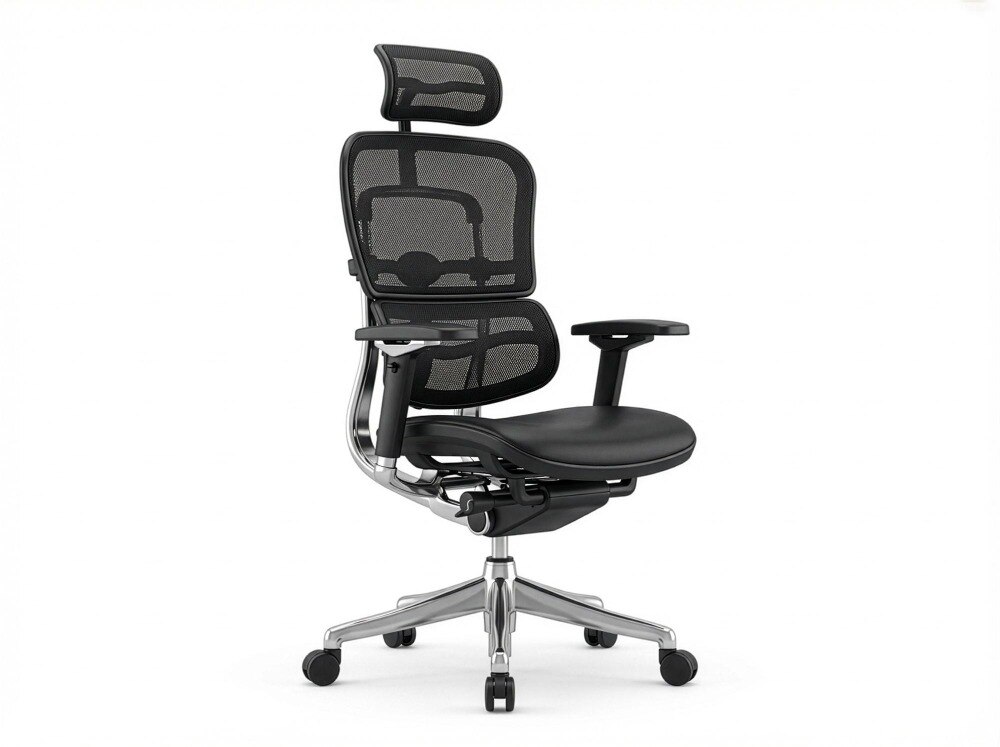
A tall mesh back can improve airflow and spread support across more of your upper body, but it does not guarantee a good fit. By the end, you will know which Matrix features to verify, how to adjust the chair to your desk, and whether its footprint and movement suit your Thane home workspace.
Key takeaways
- Extra back height adds contact area, not automatic posture correction.
- Confirm seat depth, lumbar support, armrests, tilt tension, and height range.
- Set your feet flat, elbows near 90 degrees, and screen at eye level.
- Measure desk clearance, chair movement, and floor space before buying.
What a high back changes in a home workspace
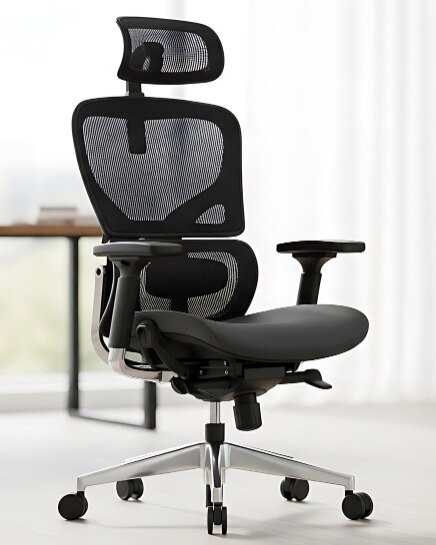
A high back means the support area extends beyond the mid-back toward the shoulder blades, upper back, and sometimes the head. A medium-back mesh chair usually stops around the lower or mid-thoracic area. Extra height does not automatically improve posture; it simply provides a larger contact area.
The main high back mesh chair benefits for a home workspace include:
- Mesh permits more air movement across your back in a warm or humid Thane room.
- The open back reduces contact with foam or leather upholstery during long sessions.
- A larger surface distributes pressure across more of the upper and middle back.
- The taller frame lets you shift your shoulders and upper back without reaching beyond the backrest.
Mesh does not cool the room, lower humidity, correct a poor sitting position, or provide lumbar support by itself. The lower-back support must meet your lumbar curve at the correct height and prominence; if it sits too high, too low, or pushes too far forward, you may slide away from the backrest.
Treat a Matrix high back mesh chair for home as one part of the workstation. Check that its seat height, back angle, armrests, and lumbar support fit you and your desk. A tall back is useful coverage, not a complete ergonomic solution, and it cannot replace regular movement during computer work.
Which Matrix adjustments must you confirm before buying
A Matrix high back mesh chair for home is a sensible choice only when its adjustments match your body and desk.
Do not infer specifications from “Matrix,” “high back,” or “ergonomic.” Searches for matrix high back mesh for chair benefits in Thane should lead you to the exact model’s specification sheet, adjustment-lever photographs, or a showroom demonstration.
Confirm these points:
- Headrest: supports your head without pushing it forward.
- Lumbar support: moves to meet your lower-back curve, rather than sitting too high or too low.
- Seat height: lets both feet rest flat while your thighs stay level.
- Seat depth: leaves space behind your knees when your back touches the backrest.
- Armrests: adjust so shoulders relax and elbows stay close to your body.
- Tilt tension: lets the backrest follow you without pulling your head away from the screen.
- Recline locks: identify the available lock positions instead of assuming upright-only or free recline.
- Mechanism: confirm whether it is synchronous or a basic reclining mechanism.
- Base: verify a 360-degree five-star caster base for turning and movement.
| Feature | Why it matters | What to verify |
|---|---|---|
| Headrest | Neck support without forward pressure | Height and angle range |
| Lumbar support | Keeps contact with the lumbar curve | Up-down and depth adjustment |
| Seat depth | Prevents pressure behind knees | Sliding seat or stated depth range |
| Armrests | Keeps shoulders relaxed | Height, width, or pivot movement |
| Tilt system | Supports posture changes | Tension dial and lock positions |
If any feature is not explicitly listed, treat it as unconfirmed.
Set the chair to your desk, screen, and body
Start with seat height: place both feet flat on the floor, keep your thighs approximately horizontal, and position your knees around hip level. If the desk requires a higher seat, add a footrest instead of leaving your feet unsupported.
1. Set the seat depth so your back contacts the backrest while a small gap remains behind your knees. Too much depth can press behind the knees and encourage you to slide forward.
2. Adjust the lumbar support into the natural curve of your lower back. A high back mesh chair does not provide lumbar support simply because the backrest extends higher.
3. Set the armrests so your shoulders stay relaxed and your elbows remain close to your torso. Lower or remove armrests that hit the desk or stop you from moving close enough to the keyboard.
4. Position the monitor with its top at or just below eye level and at a comfortable viewing distance, following OSHA workstation guidance.
5. Set tilt tension so reclining supports your back without pulling your neck toward the screen. Do not use a headrest to compensate for a monitor positioned too low.
Treat a Matrix chair for work from home as part of the workstation, not a replacement for correct desk and screen placement. Do not lean on fixed armrests or lock the chair upright all day.
The high back mesh chair benefits include airflow and broader upper-back contact, but no chair removes the strain of prolonged static sitting; change position and take brief movement breaks throughout the day.
Check fit, floor space, and apartment practicality
A high-back Matrix chair suits a compact Thane apartment only when its full movement zone fits the room. Measure the user’s height, shoulder position, preferred seat depth, desk height, and the desk-to-wall distance. Include the five-star base, caster spread, armrests, and clearance to pull out, turn, and recline without hitting a wall.
| Option | Space and comfort trade-off | Best fit |
|---|---|---|
| High-back mesh | More upper-back coverage and airflow; taller visual profile and greater wall clearance needed | Dedicated desk with room behind it |
| Medium-back mesh | Smaller appearance and footprint; less shoulder coverage | Tight desk or multipurpose corner |
| Padded executive | More solid visual presence and cushioning; less airflow and greater bulk | Room where softness matters more than ventilation |
Compare caster movement and noise on tile, laminate, wood, and uneven flooring before committing. On delicate floors, use a chair mat that covers the entire caster movement zone, not just the chair’s parked position. Fixed armrests that strike the desk can prevent the chair moving close enough to work comfortably.
A tall mesh back can look larger than a medium-back chair, while its open weave feels less visually heavy and allows more air movement than padded upholstery. Matrix high back mesh chair benefits in Thane matter most in warm rooms, but mesh does not cool the room or replace ventilation.
In a shared workspace, prioritise adjustable seat height, seat depth, lumbar position, armrests, and recline tension. Compare those settings with each user’s measurements before choosing a mesh office chair for apartment use.
Choose the Matrix against the alternatives and inspect it over time
Choose a high-back mesh chair when your dedicated desk needs upper-back coverage, airflow, and adjustable support. The high back mesh chair benefits include less contact with foam or leather and more room to shift your shoulders, not automatic ergonomic correctness.
A matrix chair for work from home still needs a suitable seat, lumbar setting, and desk height.
| Option | Best fit | Main trade-off |
|---|---|---|
| High-back mesh | Dedicated desk, upper-back coverage, airflow | Larger footprint and wall clearance |
| Medium-back mesh | Tight desk or no need for shoulder and head coverage | Less upper-back support |
| Padded executive | Softness and a solid back matter most | Less airflow and more visual bulk |
| Task chair | Compact adjustability matters most | Less broad back coverage |
| Visitor chair | Short, non-computer seating | Not suitable for daily computer work |
For a mesh office chair for apartment use, a footrest or monitor riser can fix desk-height problems more cheaply than replacing a suitable chair. Neither replaces lumbar or seat adjustment.
Shaad Enterprises is worth including when comparing Matrix seating supplied in Thane, but confirm the exact specifications, test fit, warranty or service terms, and delivery access.
Inspect the chair over time:
- Vacuum dust from the weave and clean spills gently.
- Check mesh tension for loosening or damage.
- Test the gas lift, casters, tilt mechanism, and fasteners.
- Stop daily use if the seat sags, the lift slips, or the base becomes unstable.
Related product
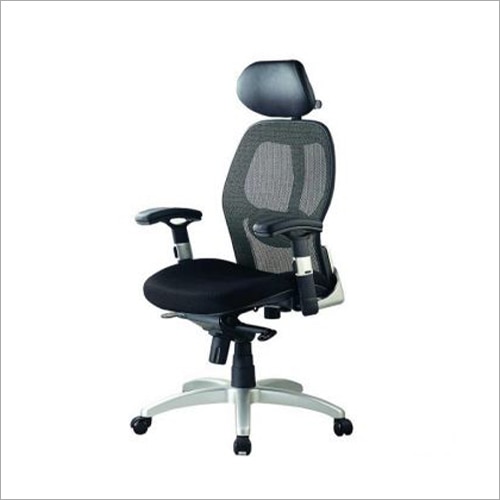 | Office Chairs Matrix High Back Mesh Office Chair Sure — if you want an assembly (make-up) guide specifically for a Matrix High Back Mesh Office Chair that you can use in your business Chirag Steel... View product → |
Frequently asked questions
What does a high back change in a home workspace?
It extends the chair’s support area above the mid-back toward the shoulder blades and upper back. The extra height increases contact area but does not automatically improve posture.
Which Matrix chair adjustments should you confirm before buying?
Check seat-height range, seat depth, lumbar support, armrest adjustment, back tilt, tilt tension, and the chair’s weight rating.
How do you set a Matrix chair to your desk and screen?
Set the seat so your feet rest flat, keep your knees near hip level, place elbows near 90 degrees, and position the screen with its top near eye level.
What should you check before placing a mesh office chair in an apartment?
Measure the desk opening, chair width, seat depth, wheel clearance, recline space, doorways, and the floor surface where the casters will roll.
How should you compare a Matrix high-back mesh chair with alternatives?
Compare its adjustability, lumbar support, seat dimensions, armrests, recline mechanism, footprint, warranty terms, and suitability for your desk and daily use.
Keywords