A chair can fit beneath a compact desk yet still fail because its arms, seat depth, base, or recline movement consume the usable space. By checking dimensions, adjustment ranges, body fit, movement clearance, delivery access, and maintenance needs together, you can decide whether an executive mesh model suits your workstation or whether a smaller task chair is the better choice.
Key takeaways
- Measure desk depth, legroom, doorways, and chair pull-out space.
- Choose medium back support when you do not need head and neck coverage.
- Prioritise seat depth, lumbar support, tilt tension, height range, and armrest clearance.
- Confirm delivery access, assembly, warranty, cleaning instructions, and replacement parts before ordering.
What “medium back” means and how to measure a compact workstation
Medium back describes the backrest’s coverage, not a fixed height category. It usually supports your lower and mid-back up to below the shoulders, without supporting the head and neck like a high-back executive chair.
Check the actual backrest height because two chairs sold as a medium back mesh chair for small office use can differ substantially.
Measure the chair and workstation in this order:
- Record overall chair width, seat width, seat depth, backrest height, and armrest-to-armrest width. Use the widest point, including fixed arms.
- Measure the seat-height range from the floor to the compressed seat cushion. Choose a setting that lets both feet rest flat and keeps your forearms roughly level with the desktop.
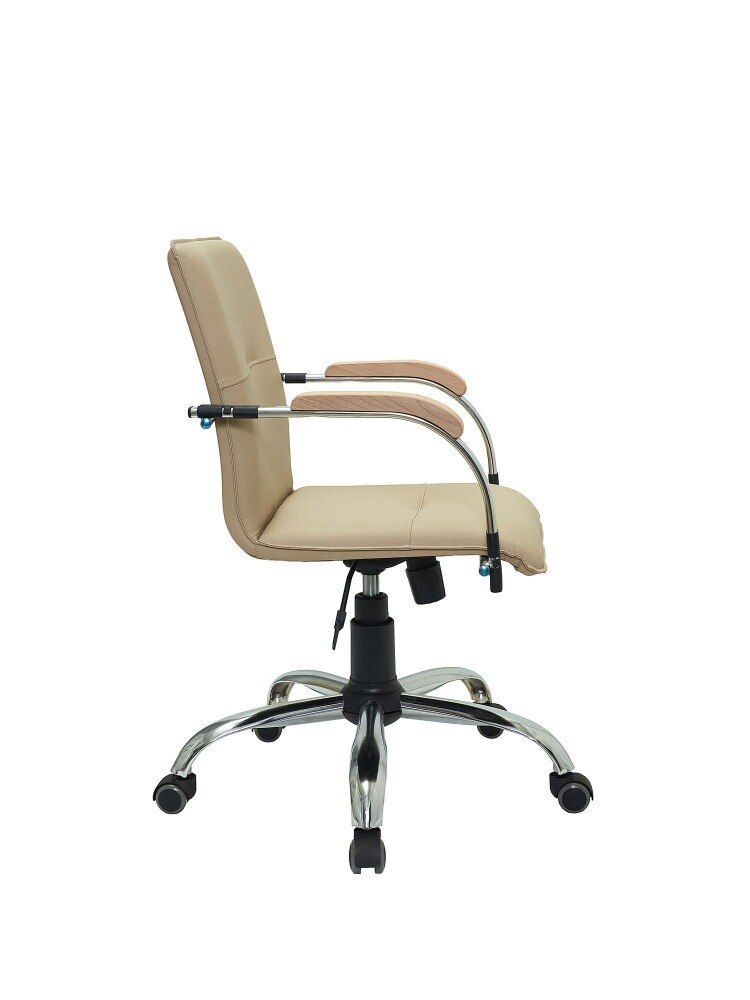
- Measure from the floor to the underside of the desk. The chair’s lowest armrest height must be below this opening; fixed arms can prevent a chair from sliding under a 600 mm-deep desk.
- Measure the desk depth, legroom width, and distance from the desk’s rear edge to the wall or storage. Add room for the backrest to move when reclined.
- Measure doorways, lift access, and the chair’s turning area before delivery.
For a medium back mesh executive chair for small office in Thane, compare these figures rather than the executive label. A chair that fits upright but strikes a wall when tilted will still waste space. A wide base or non-adjustable arms can make a smaller desk unusable.
When an executive mesh chair is better than a task or visitor chair
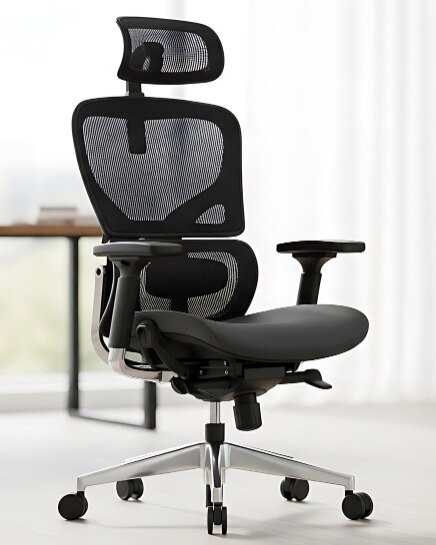
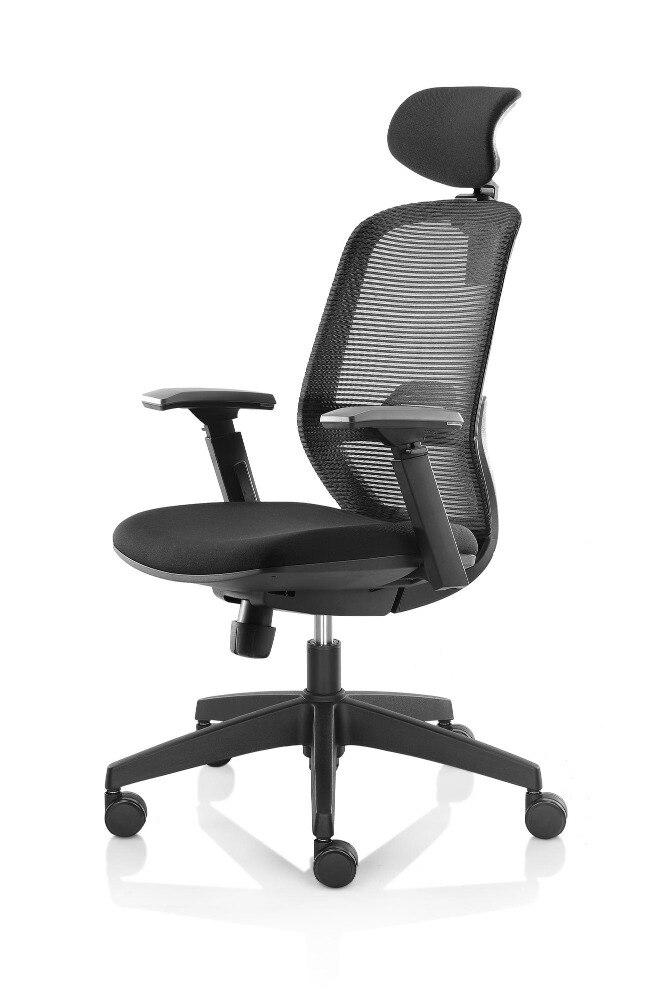
An executive mesh chair is better when you need sustained back support, a broader seat, and controlled reclining during long desk sessions. Its stronger frame, padded or contoured seat, adjustable lumbar support, and tilt-lock mechanism add comfort; they do not automatically improve a cramped workstation.
| Option | What it adds or lacks | When it fits |
|---|---|---|
| Task chair | Compact dimensions, useful height adjustment, and easy under-desk clearance | Choose it for frequent computer work where space matters more than a broad seat or deep recline |
| Visitor chair | Fixed height, limited adjustment, and a simpler frame | Use it for short meetings, not an employee’s full workday |
| Executive mesh chair | Wider seat, stronger tilt mechanism, and more supported reclining | Choose it when you work for long periods and have clearance behind and beneath the desk |
A mesh executive chair for compact desk layouts is worthwhile only after measuring overall width, armrest-to-armrest width, base projection, and turning diameter. Fixed arms can stop it sliding beneath a 600 mm-deep desk even when the seat appears narrow.
The extra construction is not worthwhile when the chair’s minimum armrest height exceeds the desk opening, its seat depth presses behind your knees, or its recline strikes a wall or storage unit. A headrest, thick padding, and a large mechanism consume room without helping every user.
For an executive mesh chair for small workspace use, prioritise seat-height adjustment, usable lumbar support, and tilt lock over styling.
Which specifications and adjustments deserve your attention
Judge the chair by contact, control, and clearance—not by the word “executive” or the amount of mesh. For a medium back mesh chair for small office use, prioritise a height-adjustable seat, usable lumbar support, tilt-lock control, and dimensions that leave room to move.
| Specification | What to check | Why it matters |
|---|---|---|
| Seat height | Range that lets both feet rest flat and forearms sit roughly level with the desk | Too high raises your shoulders; too low strains your wrists |
| Seat depth | Depth adjustment or a waterfall front edge; no pressure behind the knees | Knee pressure makes you slide forward and abandon the backrest |
| Lumbar support | Adjustable height or firm support that contacts your lower back | A loose curve offers appearance, not support |
| Armrests | Height and width adjustment, with armrests able to clear the desk underside | Fixed arms can prevent the chair from going fully under the desk |
| Recline | Lockable upright position and published rear clearance | A mesh executive chair for compact desk layouts can hit a wall or partition when tilted |
| Durability | BIFMA test report or certificate for the exact model, not only a user-weight claim | “Executive” does not prove that the frame, mechanism, or base passed durability testing |
Before choosing, confirm these points on the specification sheet:
- Record back height, seat width, overall width, and armrest-to-armrest width; “medium back” has no fixed industry size.
- Check the five-star base, caster type, mechanism warranty, and replacement-part availability.
- Reject any listing that hides seat-depth, seat-height, or recline-clearance measurements.
How to test the chair and prevent clearance problems
Test it at the desk, not in an open showroom. An executive mesh chair for small workspace use must clear the desk, wall, storage, and doorway while upright and reclined.
1. Measure the desk underside, legroom width, and distance from the desk edge to the wall. Record the chair’s overall width, seat depth, back height, and armrest-to-armrest width; do not rely on the word “medium.”
2. Sit with both feet flat and adjust the seat until your forearms rest approximately level with the desktop. If your shoulders rise, the chair is too tall; if your wrists bend sharply upward, it is too low.
3. Lower the armrests fully and slide the chair under the desk. Reject it if the arms strike the desktop or reduce legroom. Adjustable arms help only when their lowest setting fits beneath the desk.
4. Turn the chair through a complete working turn. Check the five-star base projection and caster path against nearby drawers, table legs, and walkways; a narrow chair with a wide base still consumes floor space.
5. Recline fully and measure the backrest’s movement behind the desk. Leave clearance from the wall or partition, then confirm the reclined chair still avoids storage units.
6. Ask staff to show the packed carton and assembled dimensions. Check the doorway, lift, stair, and assembly area before ordering a medium back mesh executive chair for small office in Thane.
What to confirm before ordering, delivering, and maintaining it in Thane
A quotation for a medium back office chair in Thane should show more than a product name. Ask for the actual back height, seat width and depth, overall and armrest-to-armrest width, seat-height range, packed dimensions, warranty terms, replacement-part availability, and whether service covers your address.
1. Measure the route before ordering: doorway width, lift dimensions, stair turns, and clear space beside the desk. Reserve the chair’s turning area, keep the desk underside free of armrests, and confirm whether delivery is assembled or flat-packed.
2. Confirm what assembly includes. Ask whether the quote covers unpacking, caster and gas-lift fitting, screw tightening, tilt testing, packaging removal, and a damage check. Photograph the carton and chair before signing if anything is crushed or scratched.
3. Set the chair after installation. Adjust seat height until both feet rest flat and your forearms sit level with the desktop; position lumbar support against your lower back and lock tilt only for upright work.
4. Clean mesh with a vacuum’s soft brush, then a lightly damp cloth and mild soap. Do not soak it or use bleach. Inspect casters, fasteners, the base, and gas lift monthly, and stop using the chair if the base cracks or the cylinder sinks.
Shaad Enterprises can help you compare quoted dimensions and service coverage with your measured space instead of choosing a medium back mesh executive chair for small office in Thane by its label alone.
Related product
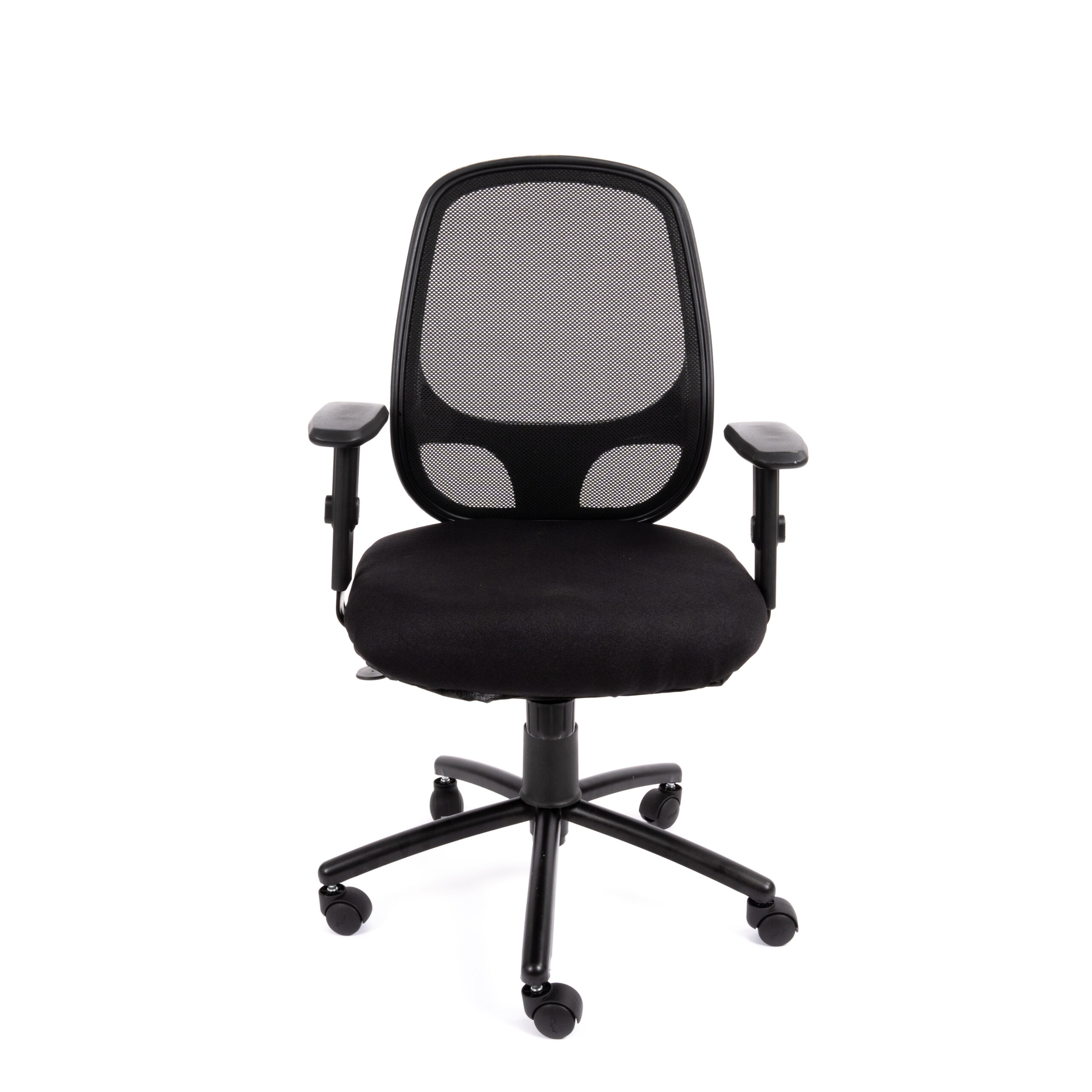 | Office Chairs Medium Back Mesh Executive Chair Shaad Enterprises Shaad Enterprises offers premium quality Medium Back Mesh Executive Chairs designed for comfort, breathability, and modern office... View product → |
Frequently asked questions
What does medium back mean in an office chair?
Medium back describes backrest coverage. It usually supports your lower and mid-back up to below the shoulders, rather than supporting your head and neck.
When is an executive mesh chair better than a task chair?
Choose an executive mesh chair when you want a broader seat, stronger back support, and a more substantial frame without using a high-back chair. Choose a task chair when compact dimensions and frequent movement matter most.
How do you measure a small office desk for a chair?
Measure desk height, underside clearance, desk depth, legroom width, and the space needed to pull the chair out. Check that armrests fit beneath the desk or can be adjusted out of the way.
Which specifications matter in a medium back mesh chair?
Compare seat width and depth, seat-height range, lumbar support, tilt lock, tilt tension, armrest adjustment, base diameter, castors, weight capacity, and warranty terms.
What should you confirm before ordering a chair in Thane?
Confirm packed dimensions, delivery access, assembly responsibility, delivery timing, invoice details, warranty coverage, cleaning instructions, and the availability of replacement parts.
Keywords